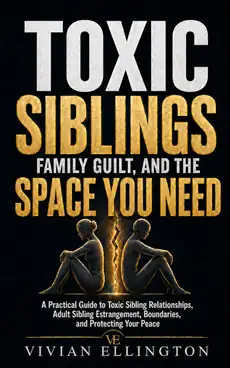
Toxic Siblings, Family Guilt, and the Space You Need
A Practical Guide to Toxic Sibling Relationships, Adult Sibling Estrangement, Boundaries, and Protecting Your Peace
Formats, current prices, and availability are shown on Amazon.
Not sure whether the pattern fits? Start with the 8 signs of a toxic sibling relationship →
The conflict keeps following you long after the conversation ends.
Recognize → Limits → Distance

Recognize
See the pattern without needing your sibling to agree with your interpretation of it.

Limits
Stop over-explaining and create boundaries around conversations, access, and behavior.

Distance
Choose the amount of space that protects your peace while remaining true to your values.
What can you do when the same conflict keeps repeating?
One argument does not define a sibling relationship. Look for what happens repeatedly, whether either person takes responsibility, and what changes after you raise a concern. You do not have to decide between tolerating everything and cutting contact today.
When they act as if nothing happened
You can be civil without pretending the issue is resolved. Name the behavior you need to see change before returning to the same level of closeness.
How to respond after an unresolved conflict →When your parents take their side
Keep the decision about your contact separate from your parents' approval. Ask them not to carry messages or turn a disagreement into a family vote.
What to say when parents take sides →When a boundary is ignored again
Choose an action you control: end a call, leave a heated conversation, or share less personal information. Watch the pattern over time.
Build a practical sibling boundary →For a longer framework on choosing limits, managing guilt, and deciding how much contact works, see what the book covers.
Clear guidance for the decisions that actually matter.
Why old patterns survive
Understand sibling roles, rivalry, guilt, silence, and the way family systems can protect familiar patterns.
Boundaries that do not depend on agreement
Move from explaining and defending to clearer limits you can actually sustain.
Low contact, no contact, and the space between
No single answer is presented as right for everyone. Choose the level of contact that fits your situation.
Go deeper on the pattern you are dealing with.
Signs of a Toxic Sibling Relationship
Use a pattern-based check before deciding what the relationship needs next.
Read the guide →Why Does My Family Blame Me for Everything?
Understand scapegoating, family blame, and why one person can become the default problem.
Read the guide →How to Set Boundaries With a Toxic Sibling
Set clear limits around conversations, access, and repeated behavior without jumping straight to no contact.
Read the guide →Different situations. The same need for clarity.